← Our guidesCity guide · Japan
Tokyo, district by district
Our complete guide to Tokyo organised by area: Asakusa, Shibuya, Shinjuku, Ginza and more: temples, observation towers, hours, prices and the best addresses.
Tokyo isn't visited like a city — it's visited like a constellation of villages.
Each district has its own mood, its own hours, its own local specialty — and crossing them without a geographic plan just hands your days over to the Yamanote Line. This guide is organised by zone: start in the north at sunrise, drift west as night falls.
01
North — the Tokyo of old
Asakusa · Ueno · Ryogoku
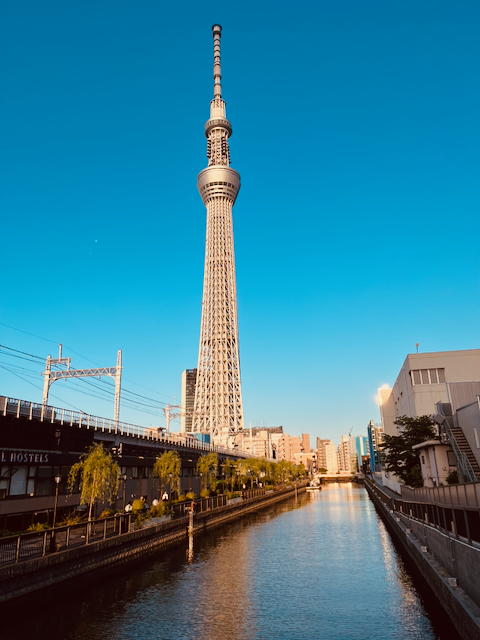
The most history-laden part of the capital: century-old shopping streets, shrines, and the Skytree's silhouette watching over the Sumida river.
Temples & old town
Asakusa
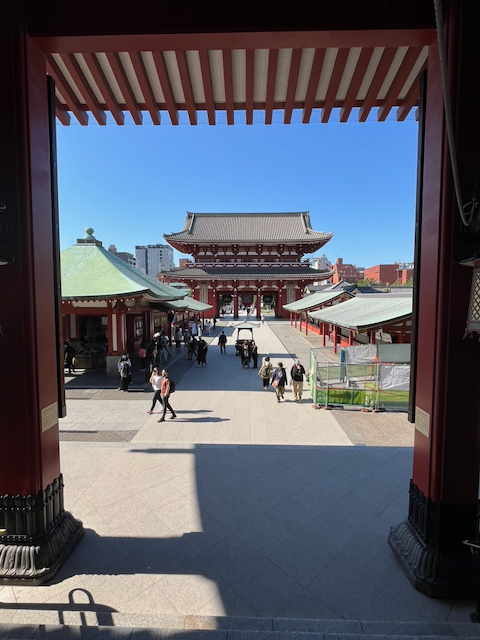
The district to start everything with. Walk up Nakamise-dori, the shopping street leading straight to the temple, snacking on a taiyaki along the way, before reaching Senso-ji and its Kaminari-mon thunder gate. Just behind it, the quieter — and equally free — Asakusa-jinja shrine.
- Senso-ji · free
- Interior 6am–5pm
- Nakamise 9am–7pm
- Skytree from ¥1,000
- Retro theme park Hanayashiki (10am–6pm) for a vintage break
- Kappabashi street, the kitchenware district
- A Sumida river cruise aboard the Hotaluna water bus, designed by Leiji Matsumoto, out to Odaiba or Toyosu
- Tokyo Skytree (634m) via the Azuma-bashi bridge — two observation decks, Fast Ticket from ¥3,200
Where to eat in Asakusa
- Grilled unagi at Chikaraya or Irokawa
- Tempura at Tempura Kondo or Daikokuya
- Soba at Towada
- Kamiya Bar — the Denki Bran, a cocktail dating to 1880
- Ningyo-yaki pastries sold around the temple
- Kura Sushi, all-you-can-eat conveyor-belt sushi
Museums & park
Ueno
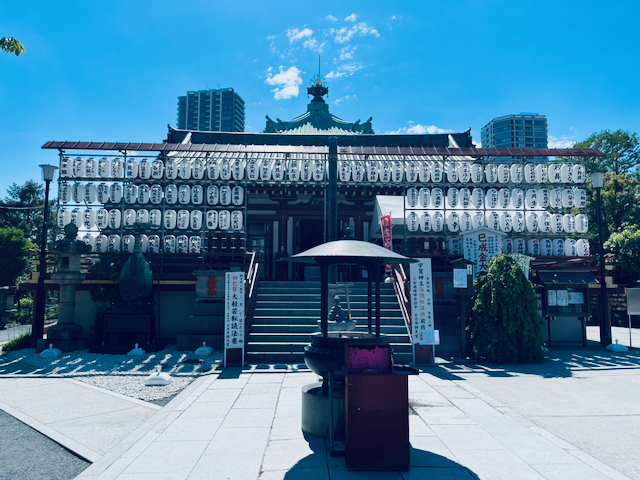
Ueno Park brings together the major national museums and 17th-century temples: Kaneiji, Kiyomizu Kannon, and the picturesque Benten-do, set on the lily-covered Shinobazu pond.
- Temples · free
- 9am–5pm
- Zoo ¥600
- Ameyoko market alleys for street food — takoyaki, yakitori
- Panda-shaped dango to snack on along the way
- Free zoo entry on March 20, May 4 and October 1
The sumo district
Ryogoku
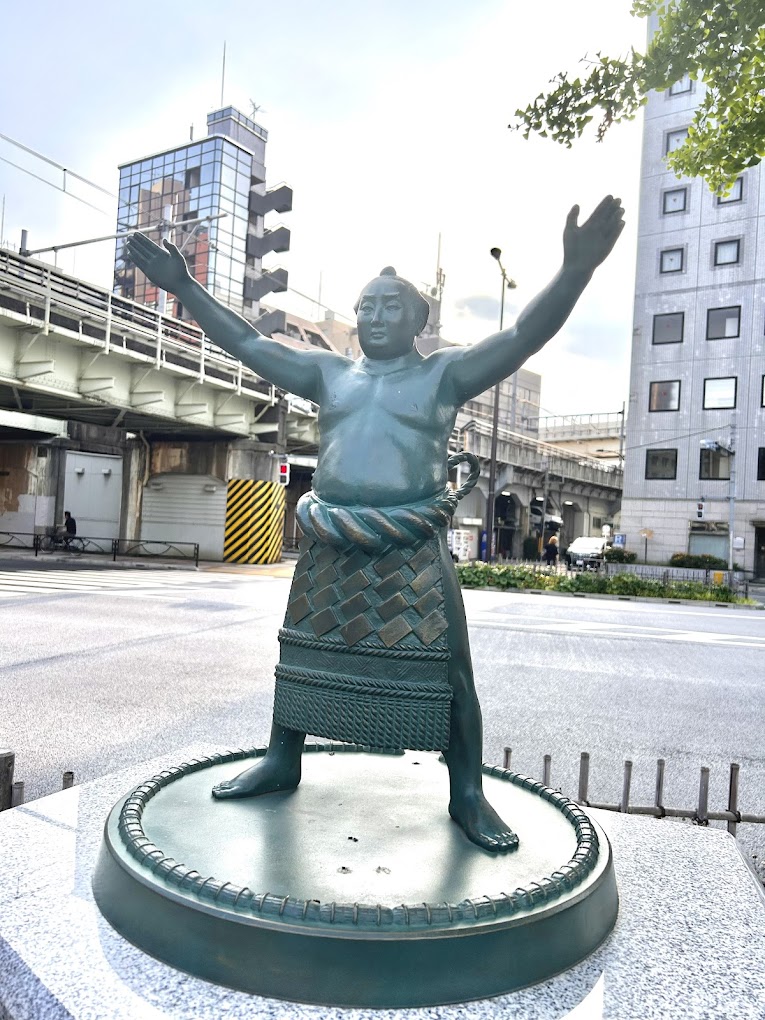
The Kokugikan, opened in 1985, hosts the six annual grand sumo tournaments in front of 11,000 spectators — easy to combine with the Edo-Tokyo Museum right next door.
- 6 tournaments a year
- 11,000 seats
02
Centre — otaku, luxury & empire
Akihabara · Ginza · Marunouchi
Three faces that couldn't be more different sit side by side here: Akihabara's electronics and pop culture, Ginza's polish, and the quiet power of the Imperial Palace.
Pop culture & electronics
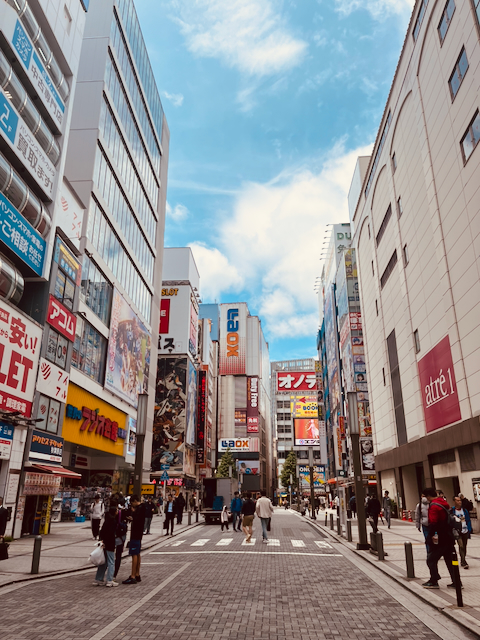
Akihabara
The district of otaku culture, manga and electronics — it's easy to lose an entire day here between the floors of stores and the maid cafés.
- Yodobashi Camera, a multi-storey temple to technology
- Don Quijote ("Donki") for just about everything, at rock-bottom prices
- Super Potato, a retro video game paradise (11am–8pm, 10am on weekends)
- Mandarake and Radio Kaikan, world references for manga and collectible figures
- Kanda Myojin shrine and Koishikawa Korakuen garden, two calm breaks nearby
Shopping & dining
Ginza
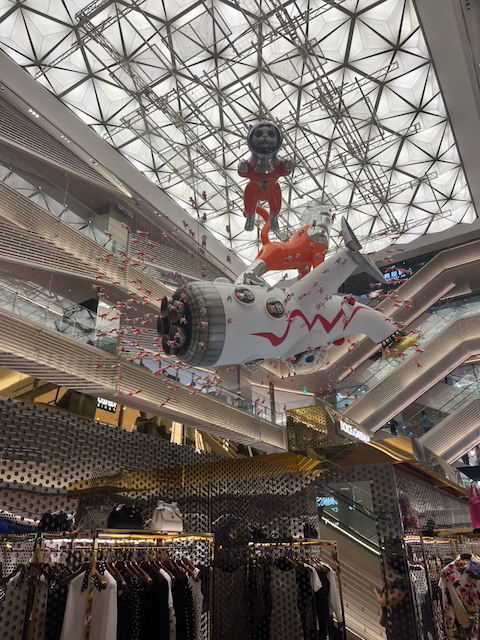
Tokyo's answer to Fifth Avenue — best saved for an evening out. Early in the morning, head to the outdoor Tsukiji market for sushi and tempura.
- Tsukiji 5am–2pm
- Closed Sundays
- Department stores: Ginza Wako, Mitsukoshi, Matsuya
- Kabuki-za, the national kabuki theatre
- A 12-storey Uniqlo on the main Chuo-dori avenue
Where to eat in Ginza
- Marutake Honten — tamagoyaki served on a stick, in the heart of Tsukiji
The imperial heart
Marunouchi
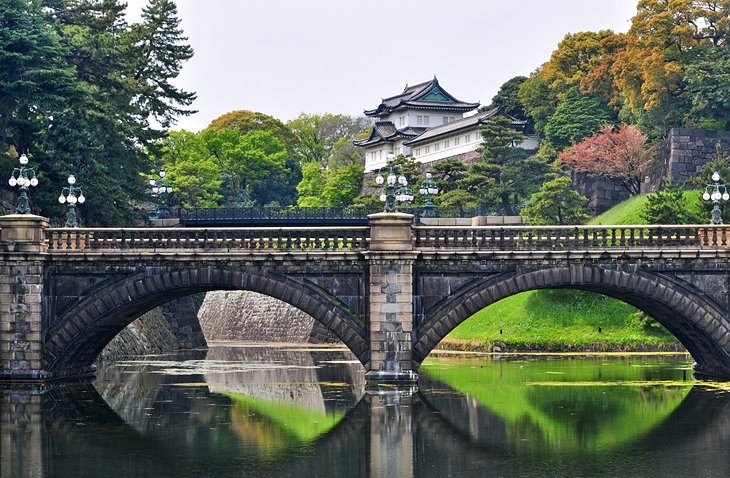
The Imperial Palace, built in 1888, can't be toured but is best admired from its moats — the Nijubashi bridge offers the most famous angle. The East Gardens (Kokyo Higashi Gyoen), however, are open to the public.
- East Gardens · free
- 9am–4:30pm (5pm in summer)
- Tokyo Station, an 1914 brick landmark
- The Tokyo International Forum, a glass vessel designed by Rafael Viñoly
03
West — the Tokyo that never sleeps
Shibuya · Shinjuku · Harajuku
The city's most photogenic trio: giant crossings, neon, skyscrapers and street fashion. Best saved for the end of your day.
The world's crossing
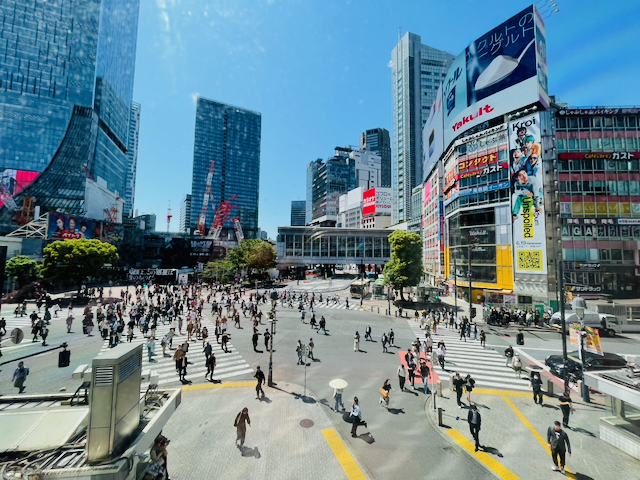
Shibuya
The world's most famous pedestrian crossing is best admired from above — from the Starbucks in Tokyu Plaza or the observation decks of Shibuya Scramble Square. Down below, the Hachiko statue honours the dog who waited nine years for his owner.
- Sky Shibuya 9am–11pm
- ¥2,000 (¥1,800 online)
- Rooftop deck at 230m
- Center Gai and Koen-dori for streetwear
- Shibuya 109, ten floors of fashion (10am–9pm)
- Parco and its Pokémon Center
Where to eat in Shibuya
- Ice Monster, snow-like shaved ice
- Flipper's, soufflé pancakes in Jinnan
- Maidreamin' maid café, for the experience
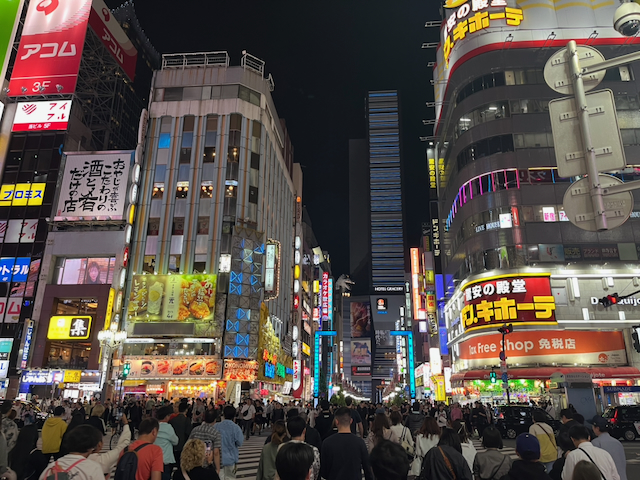
Gardens by day, neon by night
Shinjuku
Two opposite moods just a few streets apart: Shinjuku Gyoen garden with its three garden styles on one side; Kabuki-cho, its giant Godzilla, and the maze of Golden Gai — over 200 tiny bars — on the other.
- Gyoen 7am–6pm · ¥500
- City Hall observation decks · free
- Golden Gai from 7pm
- Omoide Yokocho for a yakitori dinner in a postwar-era alley
- A 243m view from the Metropolitan Government's twin towers, lit up at night
- Department stores: Isetan, Takashimaya, Odakyu
Where to eat in Shinjuku
- Sushiro, conveyor-belt sushi with playful screens
- Mugiemon, ramen with three noodle textures
- Suzuya, tonkatsu with a view
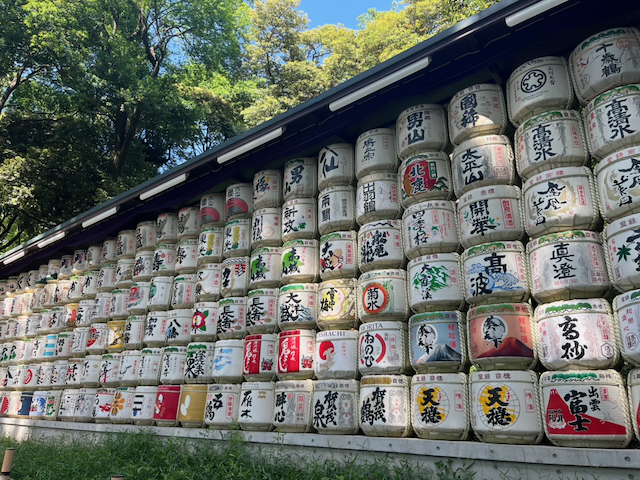
Sacred & kawaii
Harajuku
Meiji-jingu shrine, with its tribute sake barrels and its cocoon of Yoyogi forest, contrasts sharply with the buzz of Takeshita-dori and its giant crepes. Omotesando, "Japan's Champs-Élysées," closes the loop on the luxury side.
- Meiji-jingu · free
- Dawn to sunset
- Kiddy Land for Hello Kitty, Pokémon and Disney characters
- Oriental Bazaar, traditional souvenirs (closed Thursdays)
- Ōta Museum (ukiyo-e) and Nezu Museum for a quieter moment
04
South — the bay & the heights
Odaiba · Shiodome · Roppongi
Man-made islands, observation towers and contemporary art: the city's most futuristic face, set on the water.
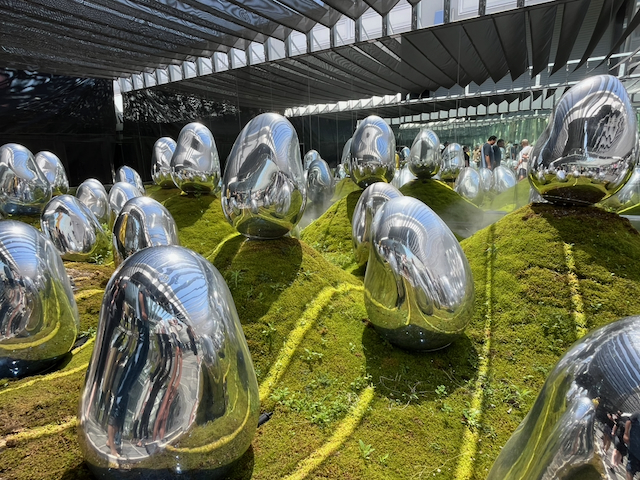
The island of the future
Odaiba & Toyosu
Cross the Rainbow Bridge (798m, lit up at night) to reach the island of experiences: immersive digital art at TeamLab Planets, a life-size Gundam statue at DiverCity, and Tokyo's biggest fish market at Toyosu.
- TeamLab 10am–8pm (9am on weekends)
- Gundam RX-78-2 · free
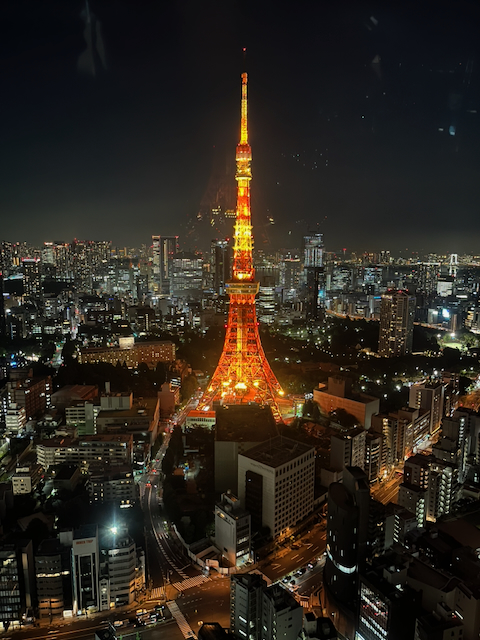
The orange icon
Shiodome & Shimbashi
Zojo-ji, a temple founded in 1393 and the burial ground of the Tokugawa shoguns, stands at the foot of Tokyo Tower — 333m of steel inspired by the Eiffel Tower, dazzling at night.
- Zojo-ji · free
- Temple 6am–5:30pm
- Tower 9am–10:30pm
Art & skyline
Roppongi
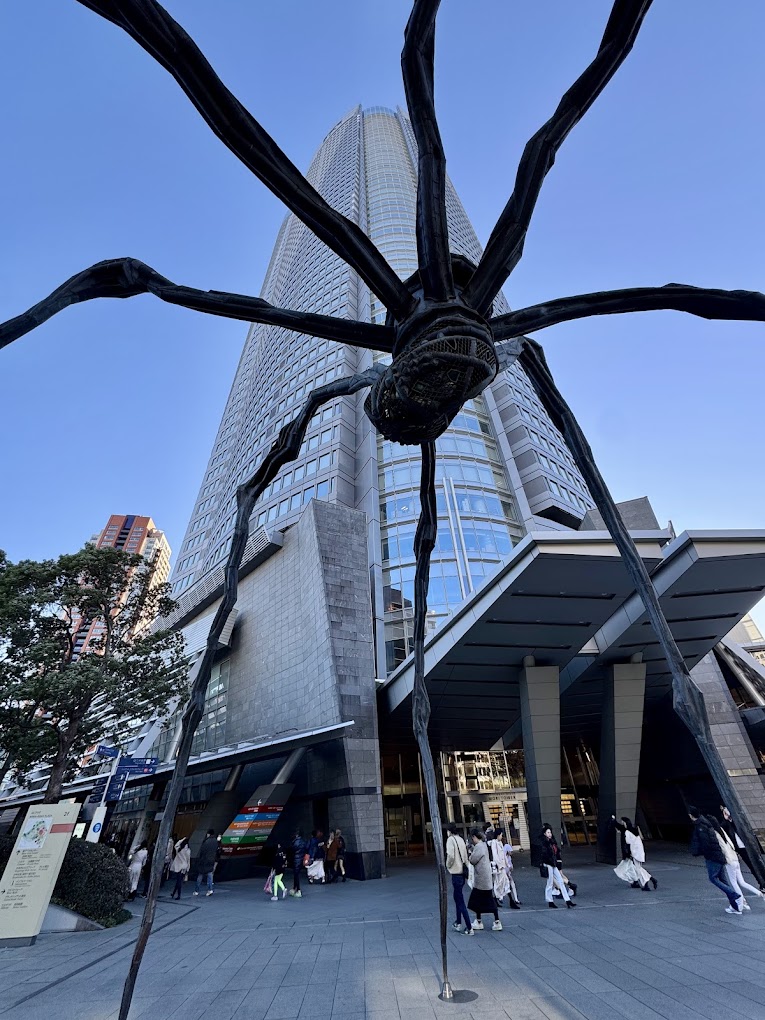
Roppongi Hills, a city within the city since 2003, announces itself with Louise Bourgeois's monumental spider. Atop Mori Tower: the Mori Art Museum and the Tokyo City View observatory at 238m, with Mount Fuji in sight on a clear day.
- City View at 238m
- Open-air Sky Deck
Where to eat in Roppongi
- Gonpachi Nishi-Azabu — the restaurant that inspired Kill Bill
Tell us when, we'll tell you where.
That's the Les Voyagistes principle: tell us your dates, and we'll reveal the destinations that are in perfect season — Tokyo is often one of them.
Find my destinations →Twelve districts, four points of the compass — and always a reason to come back.