← Our guidesCity guide · Japan
Kyoto, the city of a thousand temples
Our guide to Kyoto by compass point: Nijo Castle, Kinkaku-ji, Higashiyama, Arashiyama and Fushimi Inari: temples, gardens, hours, prices and the best addresses.
If Tokyo is Japan's energy, Kyoto is its memory.
Imperial capital for more than a thousand years, the city holds seventeen UNESCO World Heritage sites, geisha districts, and the country's most beautiful zen gardens. You explore it by compass point, setting aside half a day per zone — the distances here are bigger than they look.
01
The centre — castles, palaces & markets
Nijo · Nishiki · Pontocho
The historic and culinary heart: a castle with singing floors, and Japan's most famous covered market.
The nightingale-floor castle
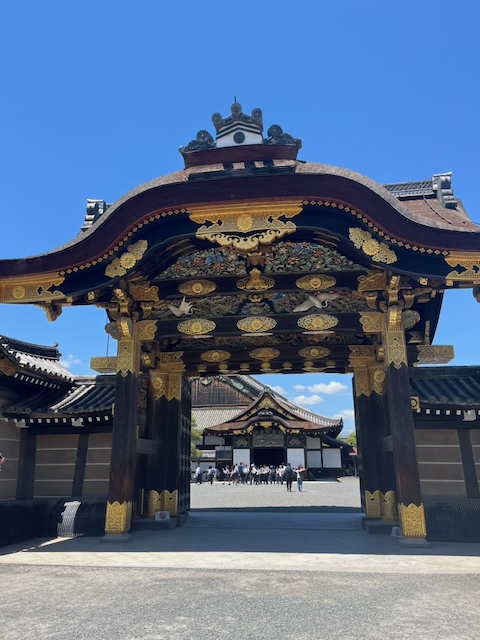
Nijo Castle
Built in the 17th century, the castle is famous for its "nightingale" floors, which chirp like a bird with every step — a period anti-intrusion system. Inside, reception halls and tatami rooms once used to receive state guests; around it, a sprawling, carefully landscaped garden.
Kyoto's pantry
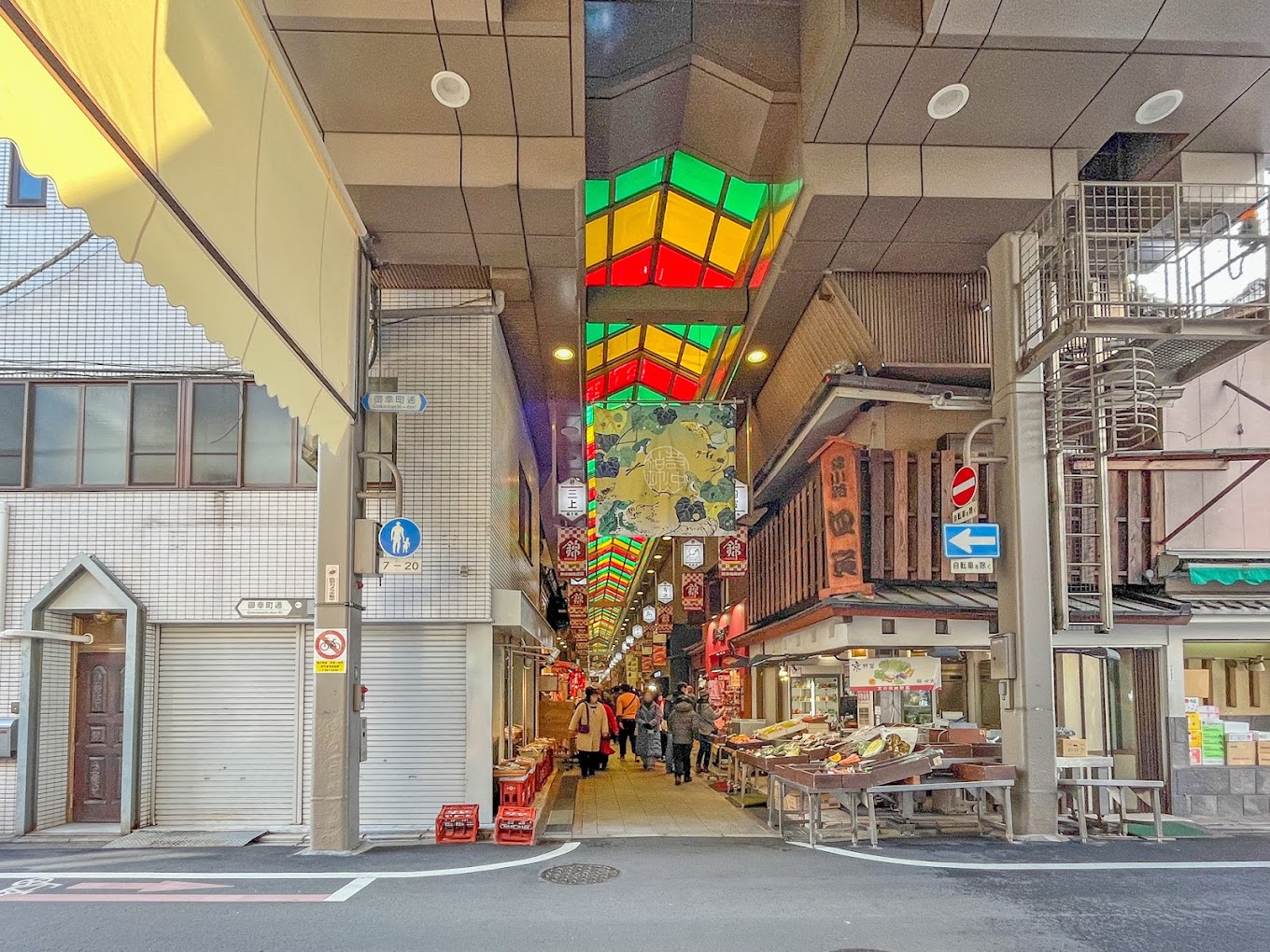
Nishiki Market & Pontocho
This covered market carries over 400 years of history: fresh fish, colourful vegetables, traditional sweets and matcha to sip on the move. In the evening, head to Pontocho, a traditional lane along the Kamo river, for dinner in a teahouse.
- Nishiki 9am–6pm
- Pontocho in the evening
- The twin temples Higashi-Honganji and Nishi-Honganji, separated by the oasis of Shosei-en garden
- Kyoto Tower (131m) facing the station, for a view over the city
- The evening buzz at the Shijo × Kawaramachi crossing and in the covered Teramachi arcades
Where to eat in the centre
- Kyo Tsukemen Tsurukame — tsukemen near Teramachi
- Chojiro — sushi ordered on an iPad, no chasing down a server
02
The north — the glow of the Golden Pavilion
Kinkaku-ji
Just one site, but THE site: the Golden Pavilion, worth a half-day all on its own.
The absolute icon
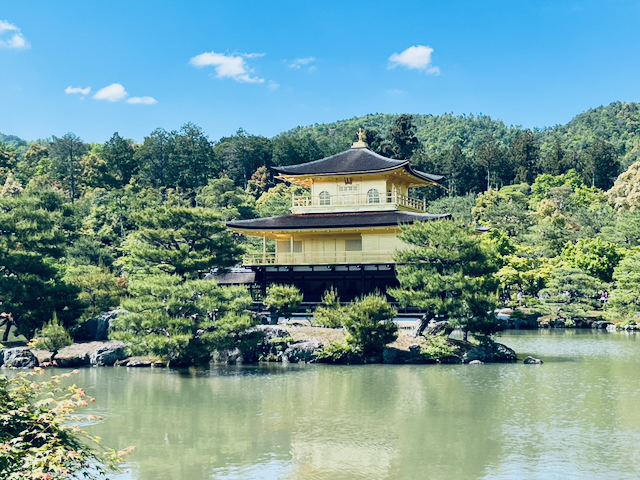
Kinkaku-ji, the Golden Pavilion
A sacred 14th-century building entirely covered in gold leaf, set in the middle of a zen garden of ponds and old wooden structures. It's the most photographed image in Japan — come at opening time to (almost) have it to yourself.
« You don't count Kyoto's temples — you choose the ones that feel like you. »
03
The east — Higashiyama & the geisha district
Kiyomizu-dera · Gion · Yasaka Jinja · Ginkaku-ji
Postcard Kyoto: cobbled lanes at the foot of the mountains, wooden teahouses, and temples cut into the hillside.
The temple above the city
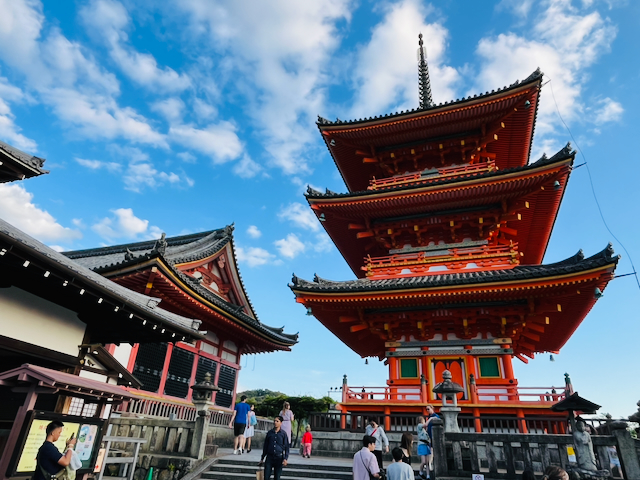
Kiyomizu-dera
One of Japan's most famous Buddhist sanctuaries, founded in 798 on a green hillside. Its wooden terrace offers a spectacular view over the city, and its spring water is said to have healing properties. Around it, the historic Higashiyama district and its atmospheric lanes.
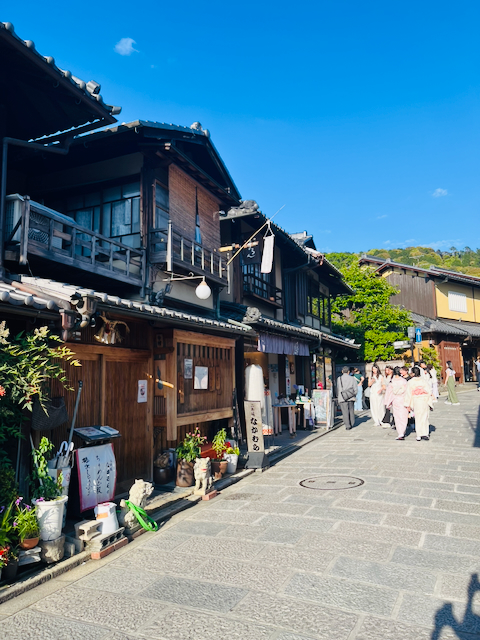
Teahouses & ancient arts
Gion
Kyoto's most traditional geisha district, five minutes east of Shijo-Kawaramachi. The preserved old houses recall the Kyoto of old; at Gion Corner, you can watch the tea ceremony, ikebana and bunraku, narrated in English.
- Shows at 7:40pm & 8:40pm
- March 1 to November 29
- Sanjusangendo and its 1,001 gilded wooden Kannon statues — 8am–5pm, ¥600
- The Philosopher's Path, along the canal, up to Eikan-do, stunning in autumn
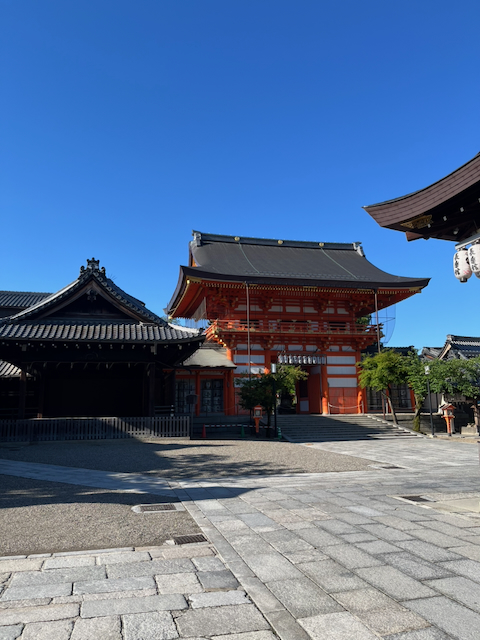
Gion's vermilion gate
Yasaka Jinja
Immediately east of Shijo street, this iconic Shinto shrine marks the entrance to the Gion district. Its lanterns and vermilion Romon gate make it one of Kyoto's most photographed landmarks, especially lively during the Gion Matsuri festival in July.
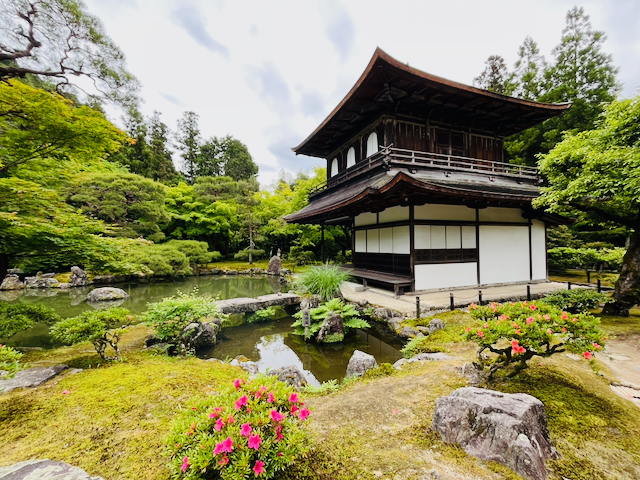
Elegance and restraint
Ginkaku-ji
Built in 1482, the Silver Pavilion — which was, in fact, never covered in silver — captivates with its restrained, refined architecture. Its meticulously designed zen gardens, with their raked sand sea and cone-shaped "Kogetsudai," make it one of Kyoto's most contemplative spots.
- 8:30am–5pm (March–November)
- ¥500
04
The west — Arashiyama & the bamboo forest
Arashiyama · Sagano
Set aside a full half-day for this pocket of nature: bamboo groves, mountain temples, and a scenic train along the Hozu river.
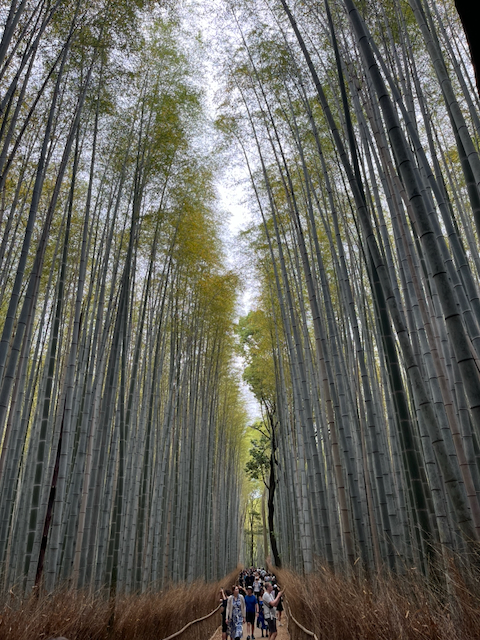
The green cathedral
Arashiyama Bamboo Grove
The path winds between twenty-metre stalks that filter an almost unreal green light. Continue on to Adashino Nenbutsuji, a lesser-known second bamboo grove whose Jizo garden lines up more than 8,000 stone statues representing the souls of the dead.
- Free access
- Nenbutsuji 9am–5pm
- Tenryu-ji, a zen temple whose Muso Soseki garden has been unchanged since 1339 — 8:30am–5pm, ¥500 (+¥300 for the buildings)
- Jojakko-ji and its three-tiered pagoda overlooking the city — 9am–5pm, ¥500
- Nison-in, founded in the 9th century, with majestic gilded Buddha statues — 9am–4:30pm, ¥500
- The Sagano Scenic Railway, a retro train along the Hozu gorges — one departure an hour, 9am–4pm, closed Wednesdays
05
The south — ten thousand torii
Fushimi Inari · Tofukuji · Toji
Japan's most photographed vermilion pathway, plus two zen temples worth the detour on the way back.
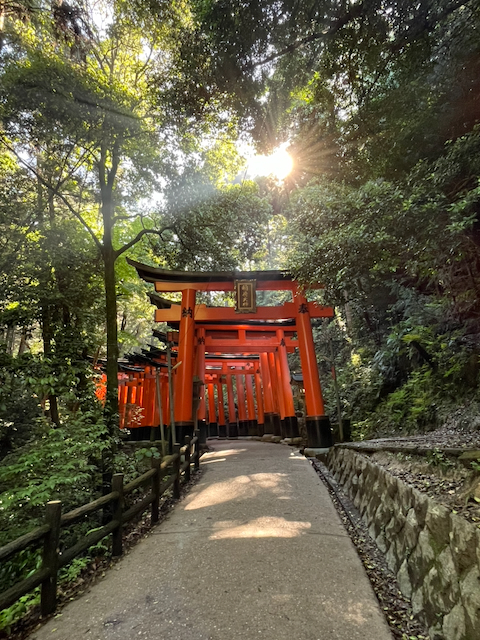
The vermilion path
Fushimi Inari-taisha
Dedicated to the god of fertility, the shrine is famous for its thousands of red-orange torii gates, donated by individuals and businesses as a mark of gratitude, forming a mesmerising path through the forest. Free and open around the clock — magical early in the morning or at dusk.
- Free entry
- Open around the clock
- Tofukuji, one of Japan's great zen temples (1236), with spectacular gardens — 9am–4:30pm
- Toji and its five-story pagoda, the tallest in Japan — 8am–5pm, ¥500
Tell us when, we'll tell you where.
That's the Les Voyagistes principle: tell us your dates, and we'll reveal the destinations that are in perfect season — Kyoto is dazzling in both spring and autumn.
Find my destinations →Five zones, a thousand temples — and one rule: slow down.