← Our guidesCity guide · Vietnam
Hoi An, the town of a thousand lanterns
Our guide to Hoi An: the UNESCO old town and Japanese bridge, the beaches, Cam Thanh village, the market and My Son: lanterns, hours, prices and the best addresses.
Hoi An reveals itself on foot or by bike, lantern after lantern.
A UNESCO World Heritage site, the old town packs its covered bridge, merchant houses and Chinese temples into a maze of pedestrian lanes. You explore it unhurried, among century-old houses, quiet beaches and villages that keep age-old crafts alive.
01
The old town — 400 years of history
Pont japonais · Maisons & temples
A UNESCO World Heritage site, Hoi An's old town packs its covered bridge, merchant houses and Chinese temples into a maze of pedestrian lanes.
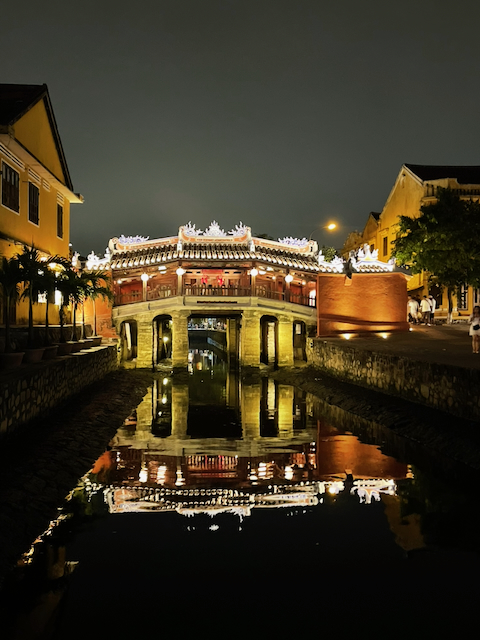
The city's symbol
The Japanese Bridge
Over 400 years old, this humpbacked covered bridge is Hoi An's single must-see. Built in the 16th century by the Japanese community to link the neighbouring Chinese quarter, it shelters a small pagoda at its centre, roofed in yellow and green tiles. Even more striking after dark, when it lights up.
The finest house in town
Tan Ky House
A local merchant's home in Sino-Japanese style, the Tan Ky house is over 200 years old and remarkably well preserved. It's the finest traditional house to visit in Hoi An.
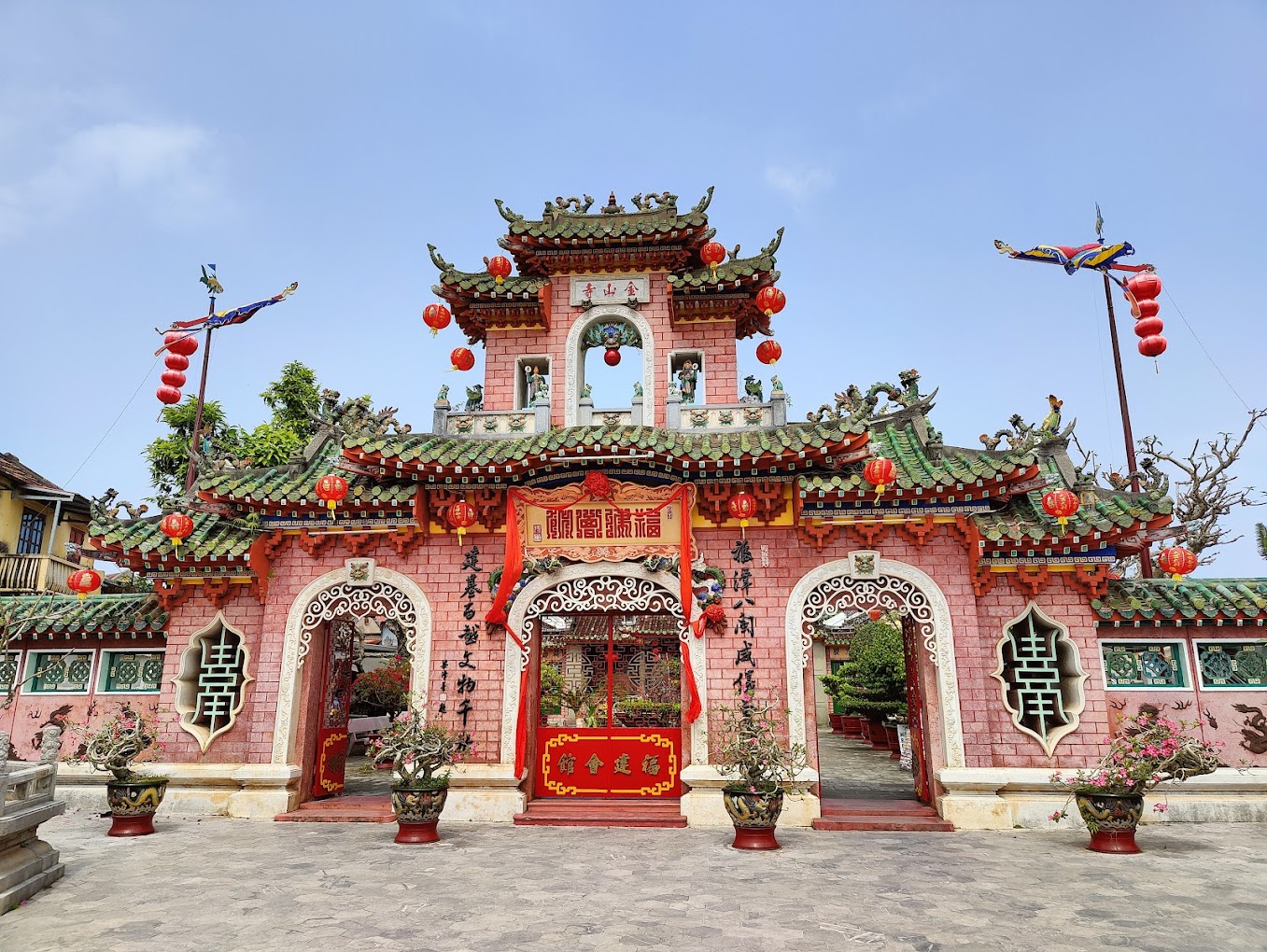
Three centuries of devotion
Chinese temples & assembly halls
Built in pink brick, the Quan Cong temple (17th century) is named after a Chinese general honoured for honesty, loyalty, justice and integrity. The Fujian assembly hall (Phuc Kien temple), dedicated to Thien Hau, protector goddess of fishermen, was the gathering place for Chinese from Fujian. The Chuc Thanh pagoda, founded in 1454 in Cam Ha village, is the city's oldest pagoda and keeps a carp-shaped wooden gong.
- Paid monuments · 5-for-22 pass
- Closes at 5pm
Wander with no plan
The lanes of the old town
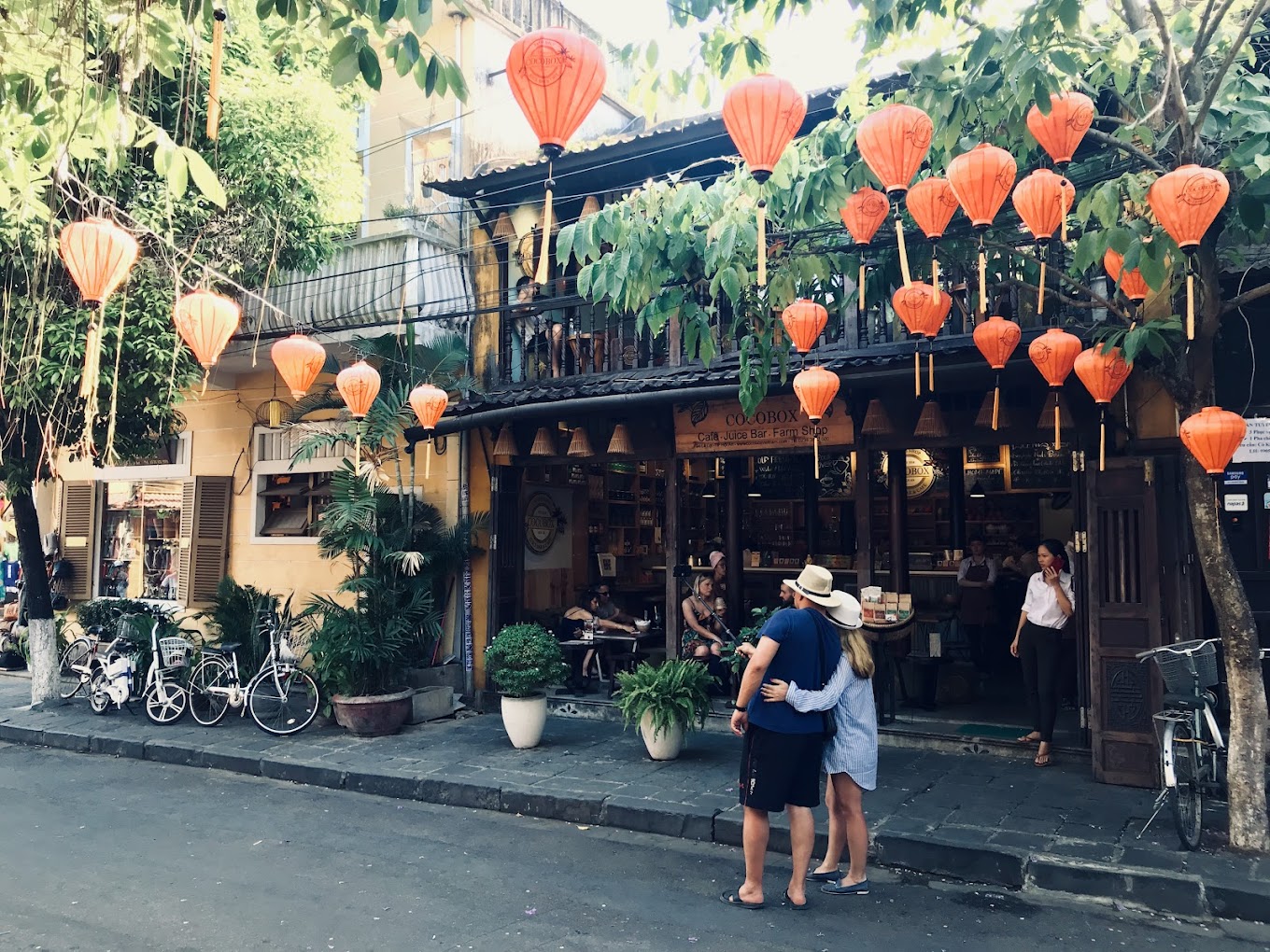
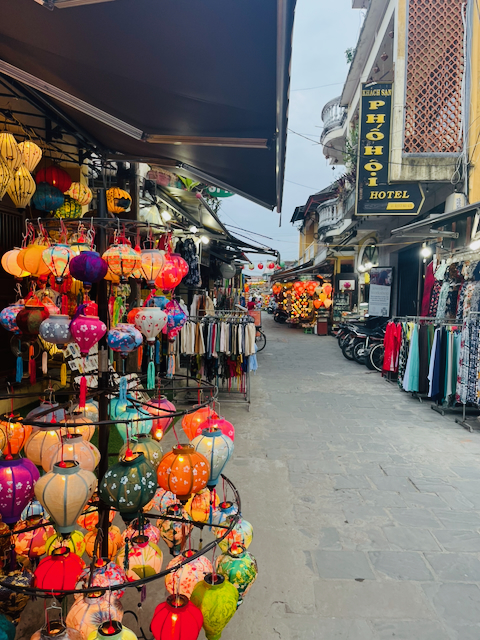
Beyond the ticketed monuments, the real joy of Hoi An is in its pedestrian lanes: ochre-yellow façades, tailor shops, colourful silk-lantern workshops and craft stalls follow one another as you stroll. It's here, between two shops, that the town reveals its most authentic atmosphere — especially in the late afternoon, when the low light warms the weathered walls.
The evening ritual
The lanterns of the Thu Bon river
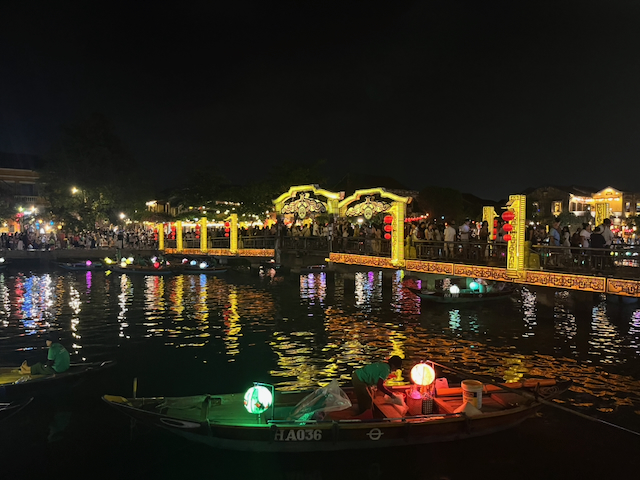
Every evening at dusk, the old town transforms: the banks of the Thu Bon river glow with coloured lanterns, while dozens of small boats offer to float a wish-lantern out on the water. An unmissable sight, especially magical on full-moon nights, when the town switches off its electric lighting in favour of lanterns alone.
- Best done at dusk
- Full moon: the 14th day of the lunar month
« Hoi An isn't visited in a hurry — you let it carry you through, lantern after lantern. »
02
The beaches — fine sand and rice paddies
An Bang · Cua Dai
A short pedal from the centre: two go-to beaches and a few quieter coves, at the end of a bike ride through the rice paddies.
Just a short pedal away
An Bang & Cua Dai
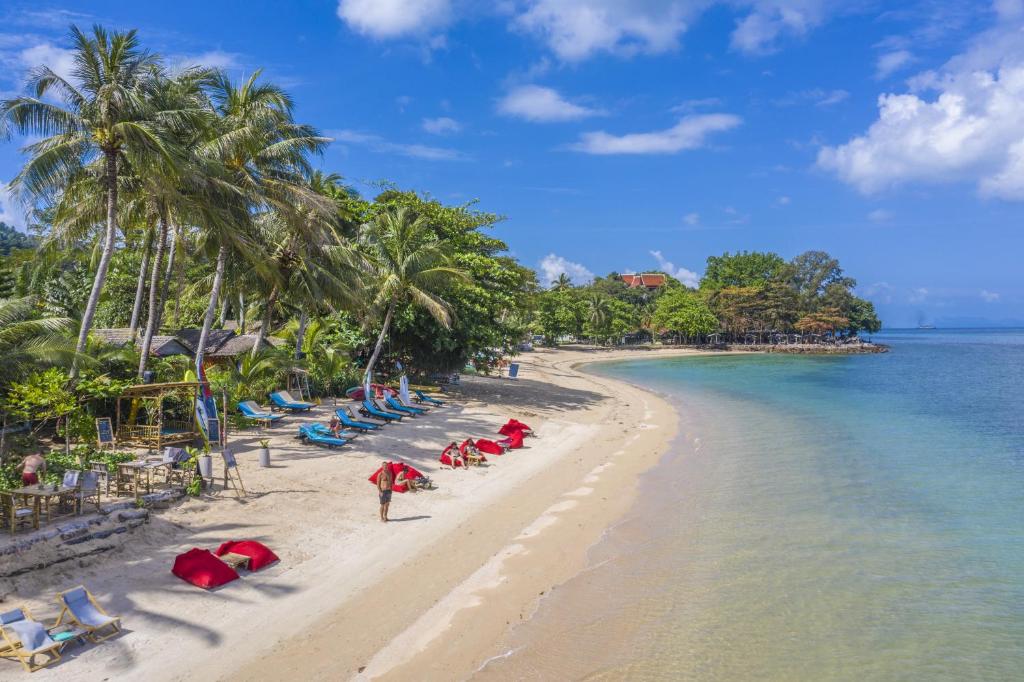
An Bang (4km) and Cua Dai (5km) are the two go-to beaches, reached by an easy bike ride through the rice paddies. For more quiet, head to Hidden Beach and Tan Thanh, tucked between the two, or Ha My, a kilometre north of An Bang.
03
The villages — age-old craft traditions
Cam Thanh
A few kilometres from the centre, this village keeps rural and craft traditions alive, away from the tourist bustle.
Fishing, coconut palms & basket boats
Cam Thanh
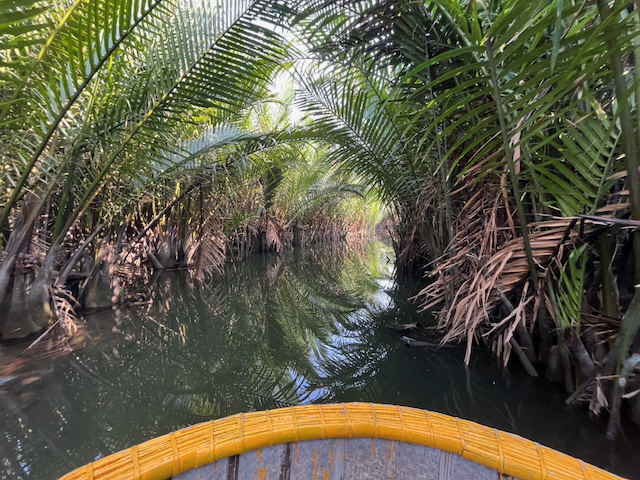
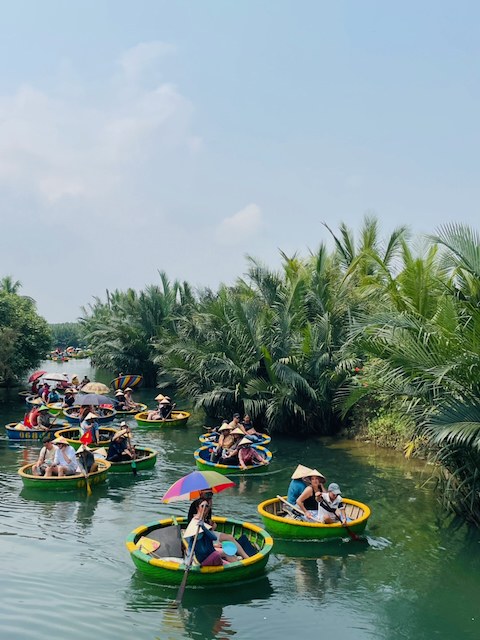
5km southeast of Hoi An, this river-crossed village lives from fishing and coconut farming. The best way to visit is by basket boat — a small round bamboo craft — through the water-coconut forest: fishermen show off their floating quarters, the net-casting technique, crab fishing, and let you pick coconuts.
04
Culture & market — portraits and flavours
Precious Heritage · Marché central
A moving photographic museum and the market where you taste the town's signature noodles.
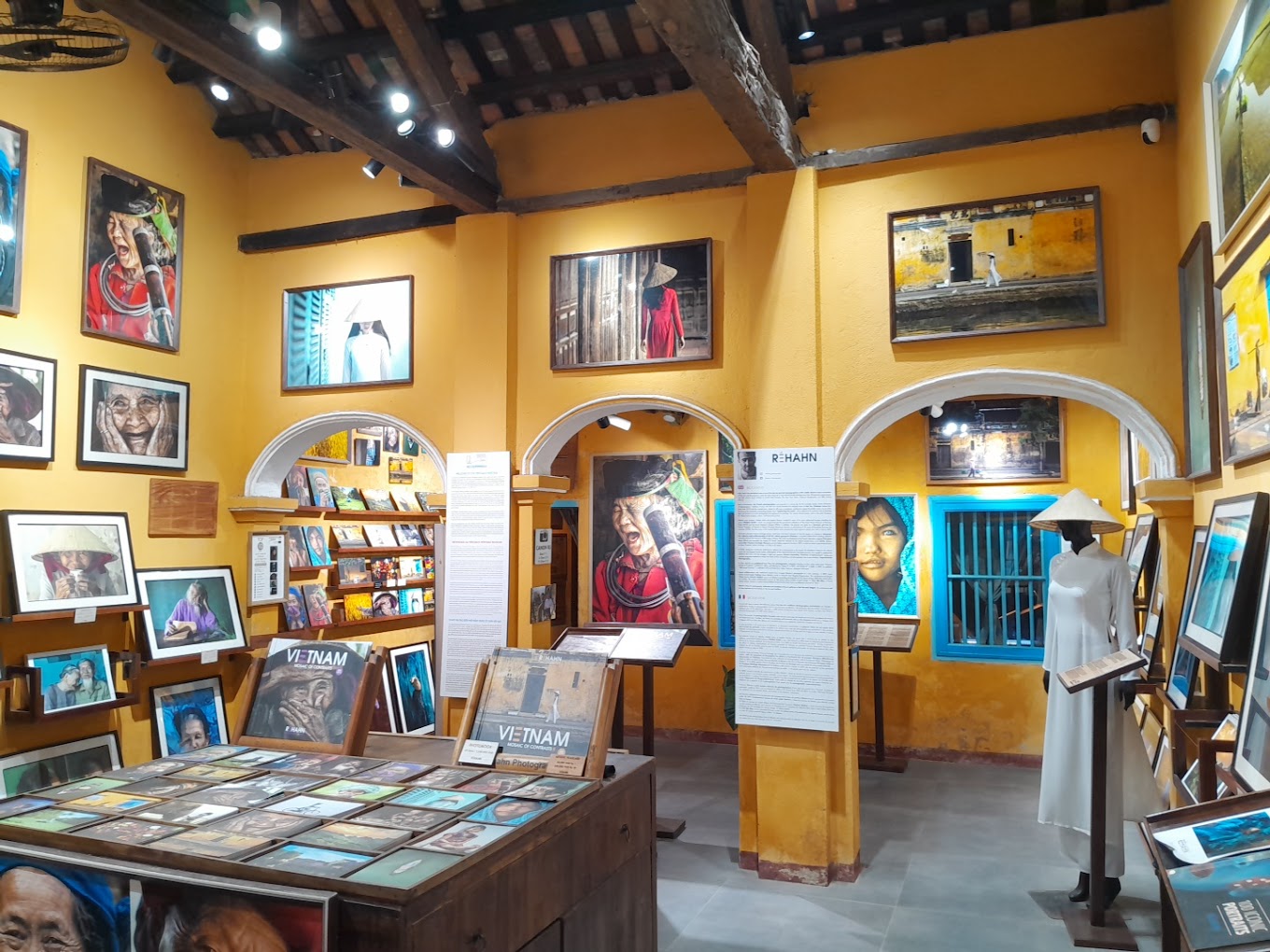
A photographic tribute
The Precious Heritage museum
This extraordinary museum, where French photographer Réhahn Croquevielle celebrates the diversity of Vietnam's 54 ethnic groups, presents huge, moving portraits alongside traditional costumes and stories of the encounters behind them.
- 26 Phan Boi Chau street
- Free entry
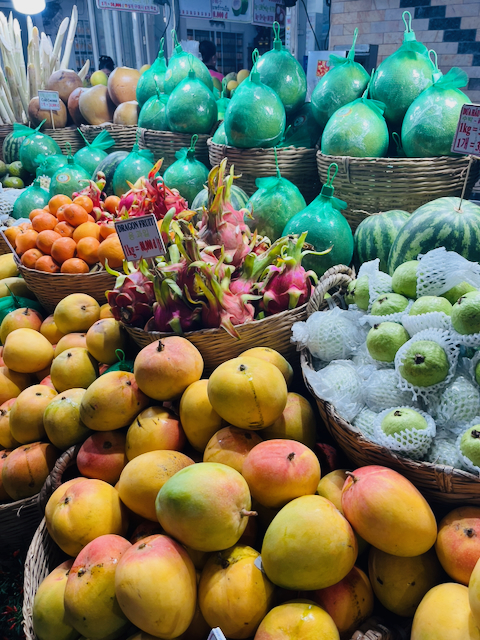
The flavours of Hoi An
The central market
Among pyramids of mangoes, pomelos and dragon fruit, the central market is the ideal place to taste local specialties: banh xeo (a crispy pancake) and cao lau, the town's signature noodles, found nowhere else.
05
My Son — the Champa kingdom
Sanctuaire Cham · Excursion d'une journée
An hour away by road, the brick towers of a forgotten kingdom, listed as World Heritage.
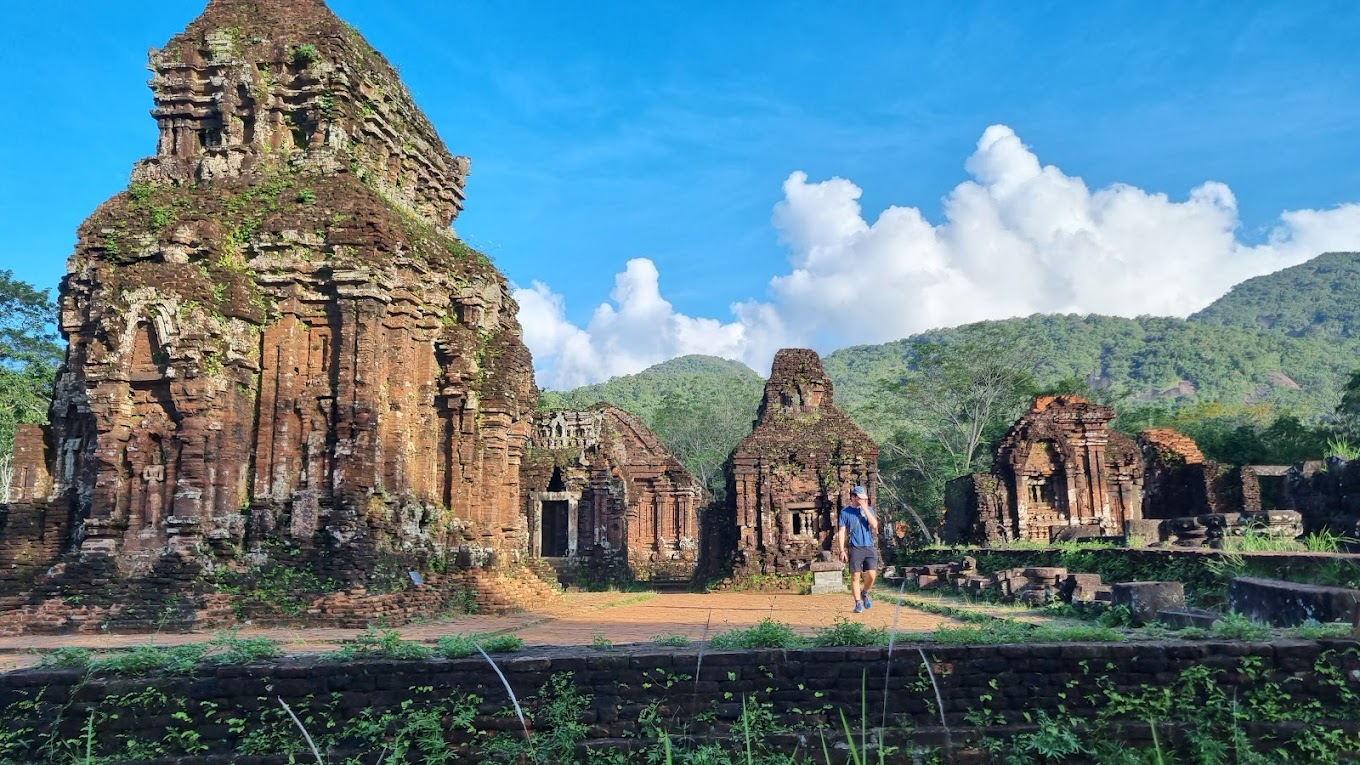
UNESCO World Heritage
The Cham sanctuary of My Son
About an hour's drive from Hoi An, this preserved temple complex of the Champa kingdom was only rediscovered in 1889, though built between the 4th and 14th centuries. A UNESCO World Heritage site, it remains one of the most remarkable examples of Champa civilisation, which inhabited the region between Da Nang and Binh Thuan province.
- Best done with a guide
- A full-day excursion
Tell us when, we'll tell you where.
That's the Les Voyagistes principle: tell us your dates, and we'll reveal the destinations that are in perfect season — Hoi An is best from February to July.
Find my destinations →Hoi An isn't seen in a day — you let it carry you through, one lane at a time.