Our guide to Dubrovnik in spring (city walls, Stradun, Mt Srđ, Lokrum and Cavtat) plus a quick escape to Zagreb: the pearl of the Adriatic before the summer crowds.
Croatia is best seen before the crowds, in the very first days of spring.
Dubrovnik, the ‘pearl of the Adriatic’, is stormed each summer by cruise-ship crowds; but in March, at the cusp of spring and before the waves of day-trippers arrive, you enjoy its walls and historic grandeur in sunshine and calm, almost alone with the locals. This guide circles the old town and its surroundings, then briefly heads up to Zagreb: the coast first, the capital second.
01
Dubrovnik, the walled old town
Remparts · Stradun · Forts
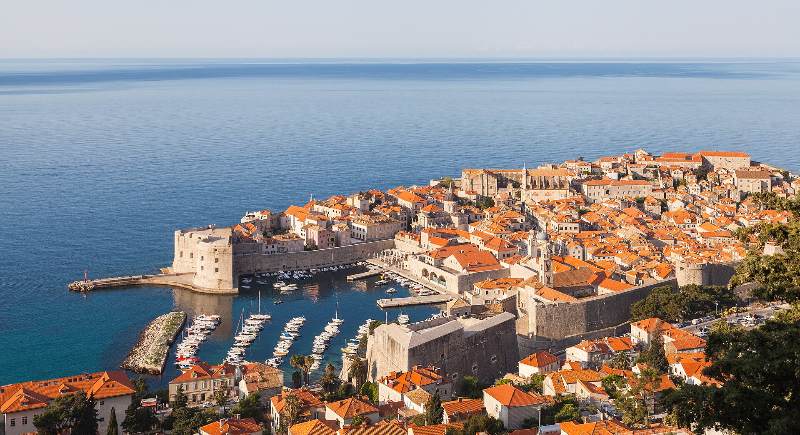
A crescent of terracotta roofs enclosed by its ramparts, handed back to calm and to the locals by the very start of spring.
The walls circuit
The old town walls
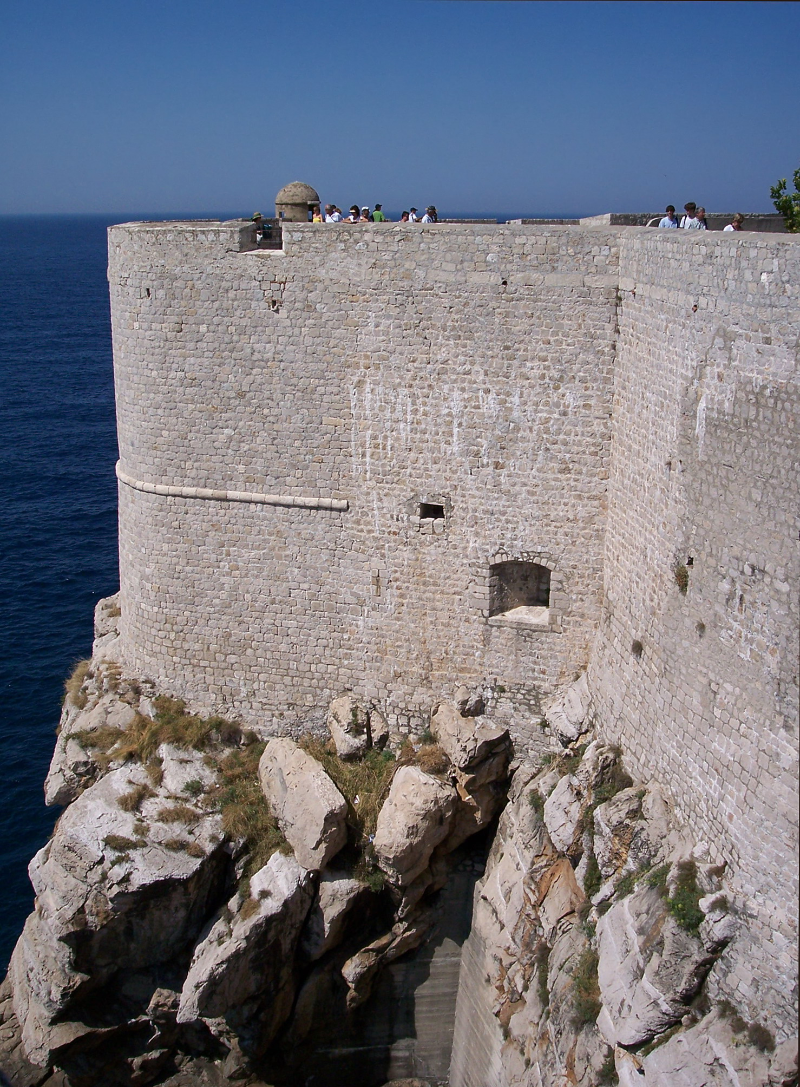
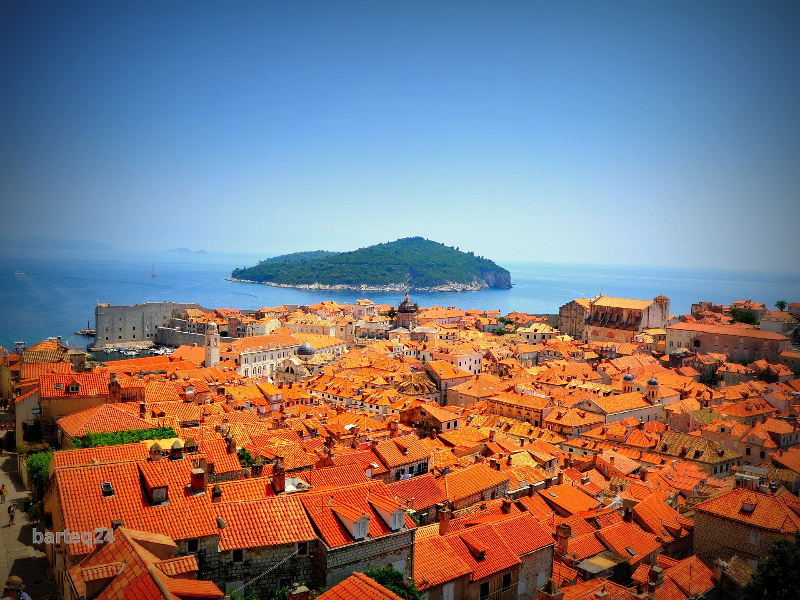
The walls circuit, nearly 2 km long and in places 25 m high and 6 m thick, takes 1.5 to 2 hours and is Dubrovnik's headline experience. Built from the 13th to the 17th century to defend the free Republic of Ragusa, the ramparts offer an ever-changing view over the terracotta roofs, the Adriatic and the island of Lokrum. Enter at the Pile Gate, the Ploče Gate or the Maritime Museum. In March the light is softer and the hours shorter, and you'll walk it without the queues or the summer heat.
~2 km circuit, 1.5–2h
Enter at Pile, Ploče or Maritime Museum
Shorter hours in March
The medieval core
The Stradun and the Rector’s Palace
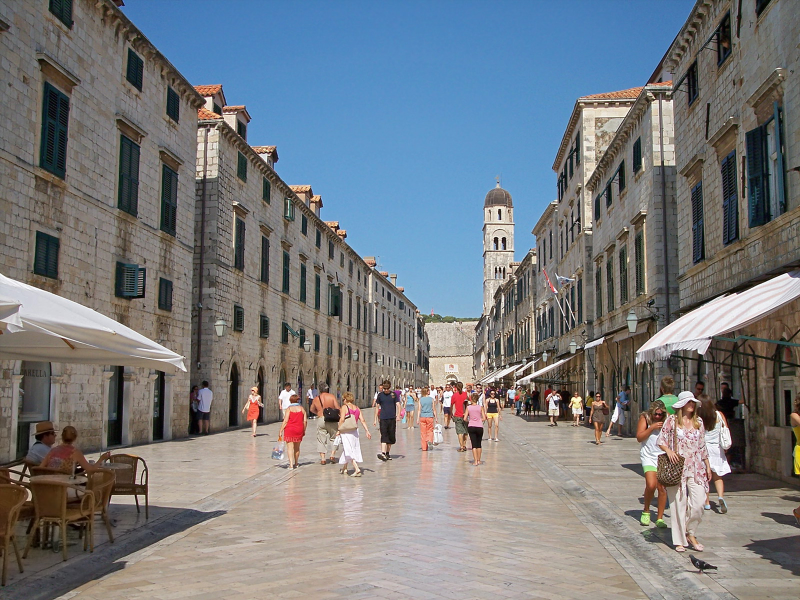
The Stradun (or Placa), the broad polished-limestone artery running gate to gate through the old town, is its backbone. Along it: the Onofrio Fountain, the Franciscan monastery (home to one of Europe's oldest working pharmacies, from 1317) and the Dominican monastery, the Sponza Palace, the bell tower and the baroque St Blaise's Church, dedicated to the city's patron saint. At its far end, the Gothic-Renaissance Rector's Palace, seat of the Ragusan government, and the cathedral. On either side you dip into the labyrinth of stepped limestone lanes.
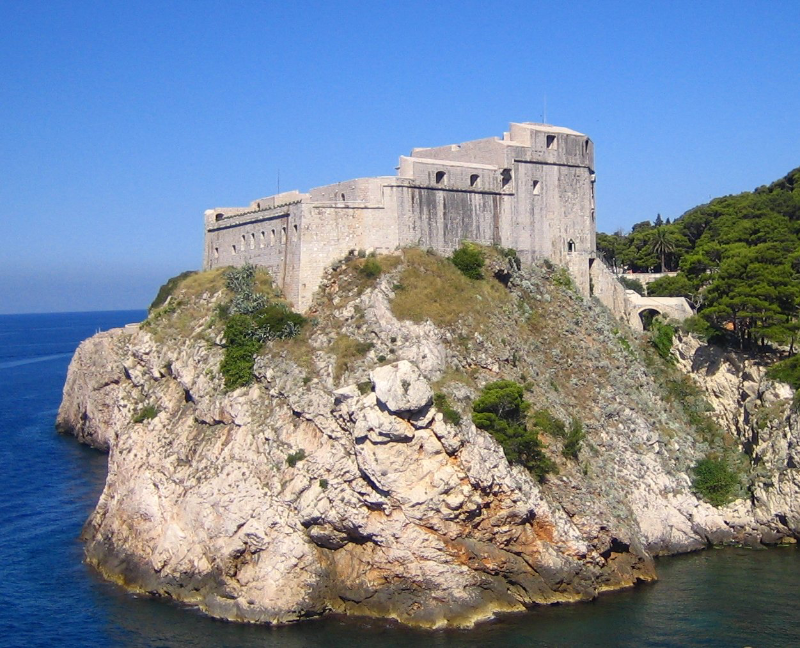
A belt of forts stands guard around the walls. Fort Lovrijenac, perched on a 37 m cliff outside the western walls ("Dubrovnik's Gibraltar") bears the city's motto carved above its entrance: "Non bene pro toto libertas venditur auro," freedom is not sold for all the gold in the world. Fort Minčeta, the great round tower crowning the highest point of the ramparts, completes the system alongside the sea-facing Bokar and Revelin forts. Fans will recognise the Red Keep and the House of the Undying from Game of Thrones.
Lovrijenac: 37 m cliff, outside the walls
Game of Thrones filming sites
« Arrive in March and you find Dubrovnik as its merchants knew it: the city handed back to its locals. »
02
Dubrovnik, heights and escapes by sea
Mont Srđ · Lokrum · Cavtat
Above the ramparts and around the bay: the panorama from Mt Srđ, the wooded isle of Lokrum, and peaceful Cavtat.
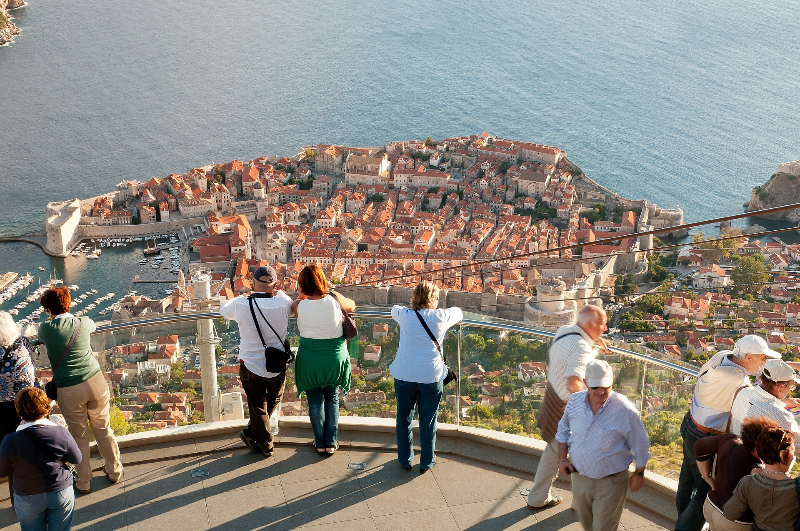
From behind the old town, the cable car climbs to the summit of Mt Srđ (405 m) in under four minutes, opening the most complete panorama over the walled city, the Adriatic and the Elaphiti islands. At the top: a terrace café, the Napoleonic Fort Imperial (now the Homeland War museum) and hiking or mountain-biking trails back down. The cable car runs year-round, but the last departure is earlier in March than in high summer.
A fifteen-minute ferry from the old harbour reaches Lokrum, a forested nature reserve with its Benedictine monastery, a small saltwater lake nicknamed the "Dead Sea," a botanical garden, free-roaming peacocks and rocky bathing coves. Legend has it Richard the Lionheart was shipwrecked here in 1192. Note: the Lokrum ferry is seasonal and generally doesn't run in winter or the very start of spring. In March, check whether it has resumed.
About forty minutes south along the bay, Cavtat is a peaceful harbour town founded by Greek settlers, the ancient Epidaurum, whose people, fleeing Slavic attack, founded the future Dubrovnik in AD 614. You stroll a palm-lined waterfront to the Račić family mausoleum sculpted by Ivan Meštrović, and along the trails of the wooded peninsula. Off-season it's a quiet counterpoint to the old town, but ferries to Cavtat run roughly April to October only: in March, you go by bus or car.
~45 min south of Dubrovnik
Cavtat ferries roughly April–October
Račić mausoleum by Ivan Meštrović
« Zagreb is seen quickly; it's the coast that holds you. »
03
Zagreb, the capital in a day
Ville haute · Saint-Marc · Dolac
A capital worth a quick stop for its upper town and market, though the coast remains the real reason to come.
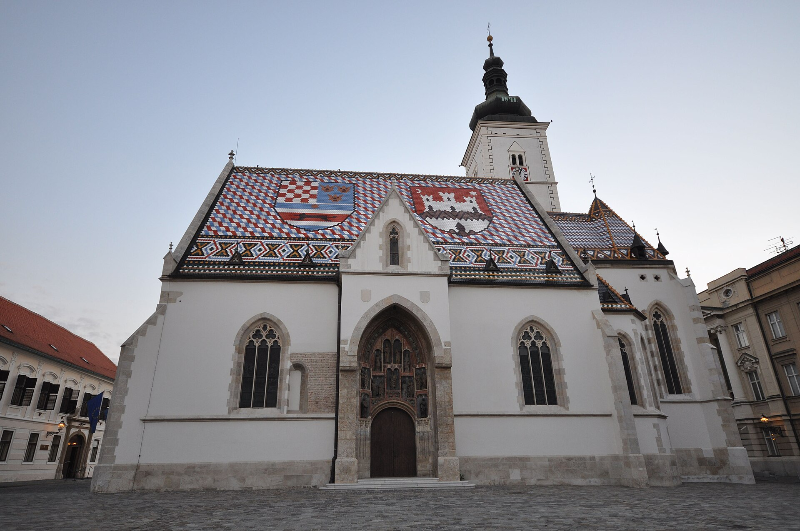
Zagreb's medieval upper town is a compact tangle of cobbled streets, reached by the world's shortest funicular (66 m, running since 1890) from Ilica street, or on foot past the Lotrščak Tower, whose cannon fires daily at noon. At its heart, St Mark's Church and its famous glazed-tile roof bearing the coats of arms of Croatia and Zagreb, flanked by the Croatian Parliament and government. A step away, the quirky Museum of Broken Relationships and the Stone Gate.
World’s shortest funicular (66 m, 1890)
Lotrščak Tower cannon at noon
St Mark’s Church and its tiled roof
The market and the spires
The cathedral and the Dolac market
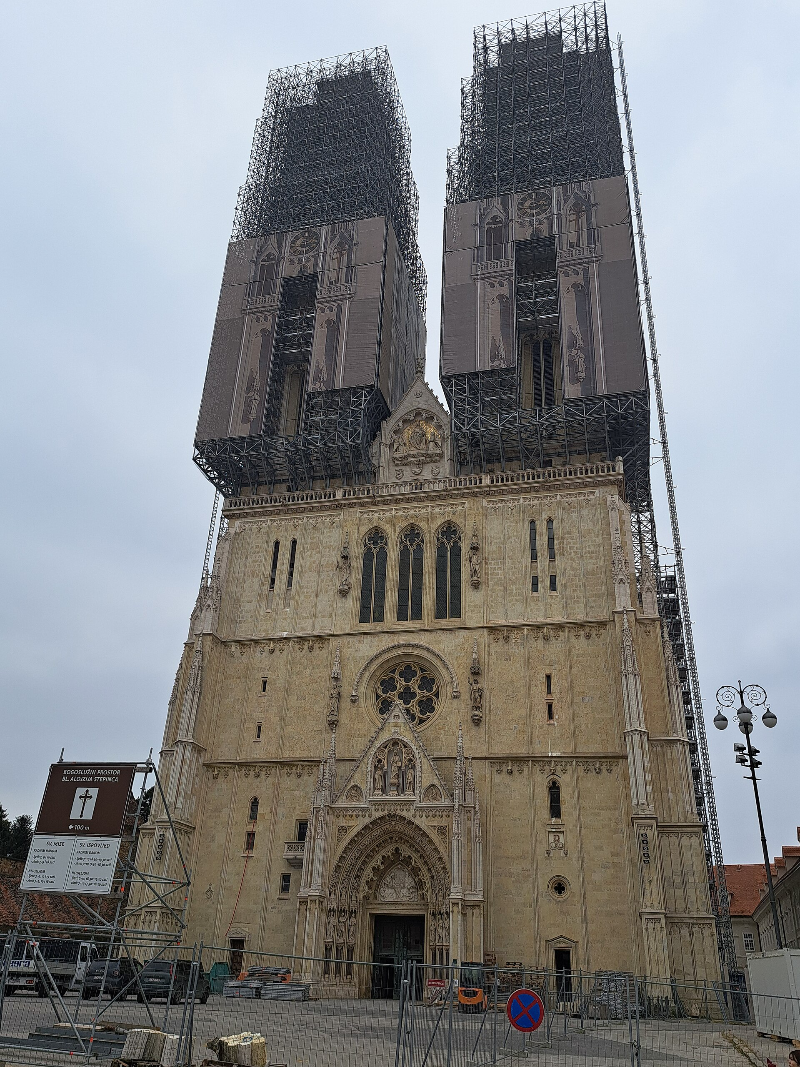
Just below the upper town, Zagreb's neo-Gothic cathedral raises its twin spires over the lower town (one long under restoration after the 2020 earthquake). Beside it, the open-air Dolac market, "the belly of Zagreb," spreads its red parasols each morning over stalls of fruit, cheese and flowers, while the lively Tkalčićeva street lines up cafés and bars. Enough for a good half-day before heading back to the coast.
Dolac market every morning
Tkalčićeva street for a coffee
Cathedral under restoration (2020 earthquake)
Tell us when, we'll tell you where.
That's the Les Voyagistes principle: tell us your dates, and we'll reveal the destinations that are in perfect season: the Dalmatian coast is at its best from March to June, before high season.